


QUICK NAVIGATION LINKS
– Melissa’s Story
– Melissa’s Education
– When you donate, where does that money actually go?
– Melissa’s Accountability Team
– Ministry Updates
– Factoids about Caselle, Italy
MELISSA’S STORY
While recovering from a crime committed against me, I discovered the Scriptures, particularly the Psalms, which comforted me during a dark time in my life. The psalmist pointed me to Jesus, and after reading Psalm 116, I placed my trust in Jesus Christ’s faithfulness, which saved me.
The Lord is merciful and fair;
our God is compassionate.
The Lord protects the naive;
I was in serious trouble, and he delivered me. (Psalm 116:5-6)
My relationship with King Jesus began in November 1992 while I was serving as a cryptologist (CTR) in the U.S. Navy in Colón, Panama. I subsequently connected with Baptist churches that served overseas-deployed U.S. armed forces in Panama and, later, in Okinawa, Japan. Having been baptized by immersion in Panama, I began to mature as a follower of Christ. After my honorary discharge, I attended a Christian college in Tennessee and earned my Bachelor of Arts in Biblical Studies.
In 1996, while still in college, I completed a two-month summer internship in Northern Italy and returned stateside with a deep sense that I had responded “Yes” to whatever God desired for my future. Over the following years, I experienced numerous confirmations of God’s call to missionary service. My sending church, Grace Baptist Church of Chattanooga, TN, likewise confirmed God’s calling in my life and commissioned me to missionary service. An Independent Baptist missions agency appointed me to Italy in January 2000. After fundraising, I arrived in the Piedmont region of Northwest Italy in February 2003 to serve on church-planting teams, and I have been here ever since.
My first assignment (2003-2012) was in the town of Giaveno (Turin province, Piedmont Region). My second and current assignment began in June 2012 with a move to Caselle Torinese, where I have collaborated with colleagues Jonathan and Noella Kleis to plant an Evangelical house church. Our shared ministry goal is to serve alongside Italians to lay the foundations for an Italian-led network of house churches in Zone 4 of the Turin Metropolitan area. In 2025, I transferred to the Modern Day platform. I appreciate their professional service and enthusiasm, and I am pleased to continue serving as a “Modern Day Missionary”.
My skills, gifts, and interests have matured and shifted over the years of my service, but a common thread has been my strong desire to communicate and teach others to love the Word of God. I have a particular passion and experience in creating distinctly Evangelical adaptations of classical liturgical resources for the worship and spiritual growth of the body of believers, and I have used my computer and graphic design skills to enhance these endeavors. Along the way, I also discovered an academic leaning in myself and, through God’s grace and provision, I pursued and completed, part-time, advanced theological degrees. My educational credentials appear in the following section.
In Summer 2026, I received and accepted an invitation to serve on the 12-member steering team for a developing Lausanne Movement (LM) Issue/Initiative Network on the topic “Intercultural Theologies and Practices (ITP).” The ITP Steering Team brings together mission scholars and practitioners with practical ministry experience from five continents. The ITP Network is new and still in its pilot phase as the steering team begins mapping a pathway to realizing the group’s vision and its five outcomes, including increasing awareness of the strengths and challenges of intercultural ministry, developing practical tools to help local churches and Christian organizations navigate cultural diversity, conducting joint research and co-publishing, and strengthening intercultural partnerships and collaborations.
When I was younger, I would likely have listed my strengths and weaknesses in resume-style bullet points. However, as I’ve aged, I’ve begun to think that perhaps my most significant strength is also my greatest weakness. A ministry partner once framed it in an interesting way, and I will rely on his description. He compared me to Nathanael in the scene where Philip introduces him to Jesus (John 1:45-50). On hearing of Jesus, Nathanael rather bluntly stated, “Can anything good come out of Nazareth?” Some might have interpreted his candor as rude, but when Jesus arrives, he compliments Nathanael by recognizing his lack of guile. You could always count on Nathanael to share his genuine thoughts on a situation, and you always knew where you stood with him. The Message Bible describes Nathanael this way: “Not a false bone in his body”. This positive characteristic does not mean Nathanael was always right. One could argue that he was indeed wrong in the cited exchange. Still, Jesus valued the underlying characteristic of plain speaking, and I believe guileless speech is both my greatest strength and my greatest weakness.
I have never held a formal position or title in local church leadership. Still, our church members recognize me as a trustworthy teacher and counselor who has their best interests at heart. I am a missionary with over two decades of on-the-ground ministry experience, fluency in my adopted language, second-culture proficiency, and numerous years of theological academic training to draw on and share with Italians and others in my supporting churches, as well as among Christian friends and acquaintances.
Notwithstanding my years of faithful service and significant training, I could not have persevered for so many years without the long-term, radical, and cheerful generosity of my donors, who have stood behind me, rooted for me, and prayed for and with me. My donor partners are truly amazing, a recurring gift of God’s provision for me as I make the most of the opportunities to effectively and winsomely share God’s wisdom and the gift of His salvation with Italians who have not yet encountered His love, and to equip Italian saints for the work of the ministry.
MELISSA’S EDUCATION
-
1999
Bachelor of Arts (B.A.) – Biblical Studies
Tennessee Temple University, Chattanooga, TN, USA
-
2014
Master of Arts (M.A.) – Applied Theology
Irish Bible Institute in Dublin, Ireland
(Accredited by the University of Wales)
-
2024
Doctor of Philosophy (Ph.D.) – Mission Studies (focus on the construction of local theologies)
Oxford Centre for Mission Studies in Oxford, UK
(Accredited by Middlesex University, London
WHEN YOU DONATE, WHERE DOES THAT MONEY ACTUALLY GO?
Your donations provide me with an income that includes benefits (insurance and retirement) and work funds. I have legal alien status and established residency in Italy. My permit as a foreign religious worker requires me to send my income from the United States. I am not permitted to secure local employment or earn money in Italy.
My work funds fall into two categories: those I use month to month, including office expenses, software subscriptions, and ministry supplies, and those I hold in reserve to fund occasional but anticipated larger expenditures, such as updating computer equipment, car repairs, medical expenses not covered by insurance, and furlough travel.
My monthly support structure breaks down as follows.
FOOD & PERSONAL FUNDS (20%)
HOUSING & UTILITIES (25%)
SELF-EMPLOYMENT TAXES (14%)
INSURANCES, PENSIONS, AND SAVINGS (20%)
WORK FUNDS (15%)
DONOR SERVICES (6%)
I am the resource, the “letter of Christ, delivered by you,” to Italy to proclaim the virtues of Jesus to the Italians God places in my path (2 Corinthians 3:1-3), while working alongside my colleagues to plant a self-sustaining Italian house church (Lord willing, network) based out of Caselle, Italy.
MELISSA’S ACCOUNTABILITY TEAM
Missionaries require two types of accountability: financial and spiritual. I have both.
My financial accountability is twofold. First, Modern Day Missions (MDM) receives, records, and manages tax-deductible donations, which simplifies giving for missionaries and donors. They also approve, by board vote, a limit on how much support a missionary can raise. Except for their 6% administrative fee and card processing fees, they send the missionary’s entire income to them twice a month and issue a 1099 at the end of each year. Second, as a 1099 recipient, I make estimated quarterly tax payments to the IRS. Each April, during tax preparation, I submit a spreadsheet logging all my work and housing expenditures, along with scanned and archived receipts.
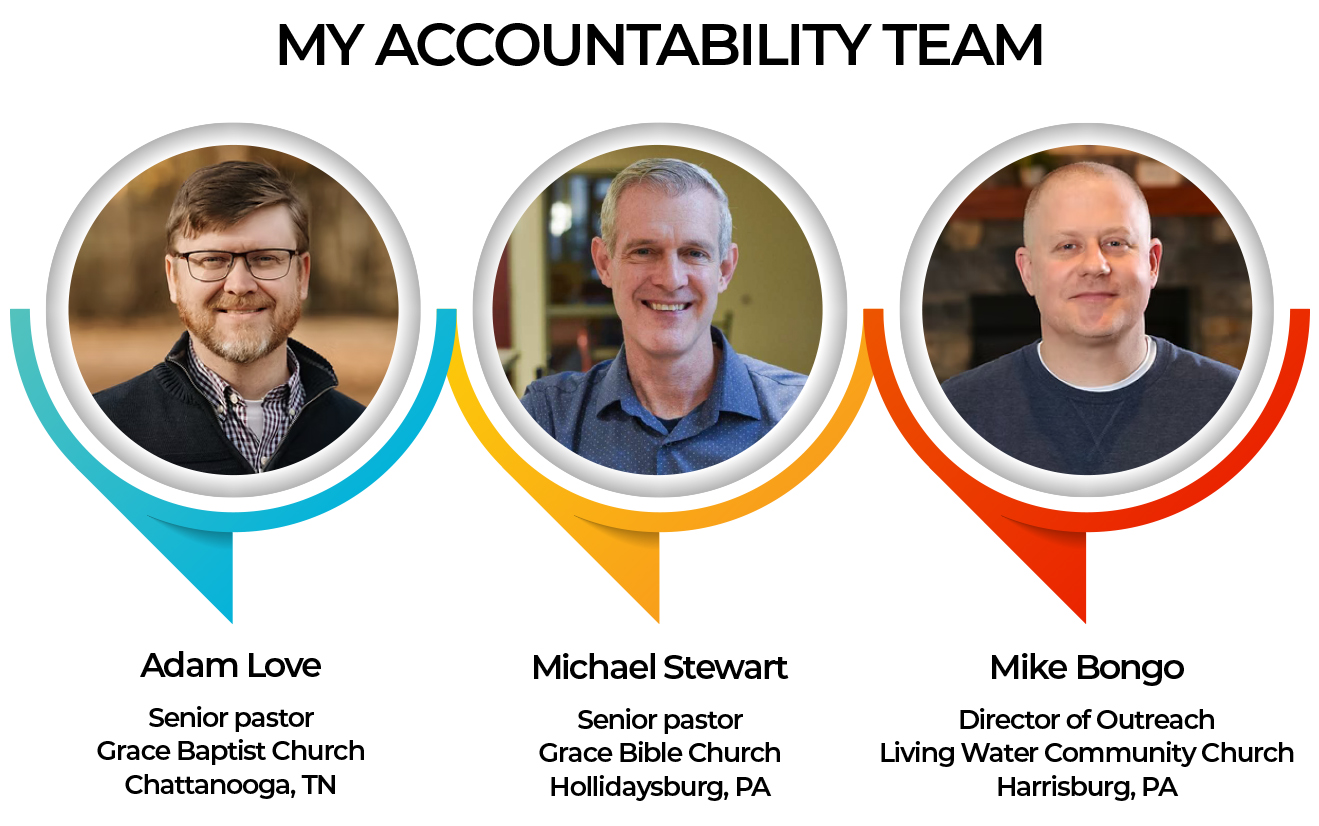
My sending church, Grace Baptist Church of Chattanooga, TN, provides my “spiritual covering”. They are my primary source of accountability and protection. I have also assembled a spiritual accountability team that I meet with biannually to pray and discuss ministry developments and plans. I send a monthly ministry update to my donors and others interested, so they can learn more and pray more for our church-planting work in Caselle and for my contributions to reaching our ministry team’s goals. These updates are another form of accountability. MDM also requires me to submit an annual report to ensure my continued submission to spiritual authority and to ask debriefing questions to check that I am well and that my needs are met.

MINISTRY UPDATE LINKS
- READ Melissa’s latest prayer update.
- SIGN UP to receive Melissa’s monthly prayer updates.
- Do you need to catch up? Access my previous three updates with these links: 1, 2, 3
THE PAPER SUPPLY OF THE GUTENBERG BIBLE
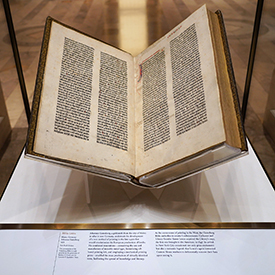
Produced in two Latin-language volumes, the Gutenberg Bible was the first large-scale type-set book ever printed. The print shop in Mainz, Germany, produced approximately 180 copies in its first edition. Scholars have examined every aspect of its components, materials, production process, and distribution. Some historians have focused on analyzing the paper the Mainz print shop purchased to print the Gutenberg Bible.
Caselle Torinese, the town where I live and minister, is 12 kilometers northwest of Turin. A stable community has inhabited its territory since the Roman era, in the first century after Christ. Despite setbacks and successes in subsequent centuries, including the “Black Death” plague that passed through in the fourteenth century, Caselle’s local economy grew significantly in the late medieval period. Situated along the Stura di Demonte River, it generated hydropower, manufactured textiles, and milled paper that Europeans highly valued.
The shop in Mainz, Germany, likely purchased paper from the Caselle mills in the early 1450s to print the Gutenberg Bible, and the paper bore distinctive watermarks featuring bulls’ heads, grape clusters, and oxen. “Reams were carried northward over the Alps, presumably by mule pack, to a point where they met up with the Rhine system, perhaps at Basel. From there, they continued by barge downstream to Mainz (p. 307).”
- Needham P (1985) The Paper Supply of the Gutenberg Bible. The Paper of the Bibliographical Society of America 79(3): 303–374.

STATISTICS: THE EVANGELICAL CHURCHES IN PIEDMONT
The New Testament presents the churches as situated entities; most epistles address a specific church (in Corinth, Thessalonica, Philippi, Ephesus, and so on). Paul chose topics in response to the addresses’ struggles with local matters, but what happens when churches are, for whatever reason, disconnected from local concerns in the communities where they gather?
During my Ph.D. research, I documented a pattern among Italian Evangelicals. Their churches are often in towns where most members do not reside. Thus, the question arose: “Are they local churches or churches with a locale?”
One explanation is the scarcity of Evangelical presence compared with the Roman Catholic Church’s territorial presence throughout Italy and the region where I serve, Piedmont. Consider these statistics.
POPULATION (2022)
Italy: 59 million
Piedmont: 4.2 million
NUMBER OF MUNICIPALITIES
Italy: 7,904
Piedmont: 1,181
NUMBER OF ROMAN CATHOLIC CHURCHES/CENTERS
Italy: 65,000
Piedmont: 2,250
NUMBER OF EVANGELICAL CHURCHES
Italy: 2,225
Piedmont: 251
You will note that while there are 2,225 Roman Catholic churches or centers active throughout the 1,181 towns and cities of Piedmont, there are only 251 Evangelical churches or ministries scattered throughout the same area, which is the second-largest among Italy’s 20 regions. As a result, 80% of Piedmont’s municipalities (likely more, since many are in the city of Turin) have no Evangelical church.
Significant missionary work takes place in the city of Turin, based on the belief that it will somehow radiate outward and affect the surrounding areas. Missions textbooks highlight city centers and emphasize the need for urban ministries (which are also necessary), while neglecting significant reflection on how to witness effectively for Christ in towns. This tendency runs contrary to the facts on the ground in Piedmont, Italy, where 88% of its 4.2 million inhabitants live in towns with fewer than 5,000 people. Moreover, if national statistics are reflected at the regional level, then 75% of the 251 Evangelical churches in Piedmont are some form of Pentecostal.
Therefore, Italian Evangelicals often attend a church in a town where they do not live, which means many churches have limited impact on the towns where they meet. Their dispersion inevitably impacts their Christian witness.
On the one hand, the descriptor “local” often refers to the distinction between the universal Church (Christ’s body) and a particular church in a specific location. In this sense, any reference to a particular church refers to a local church. Though helpful, this definition reveals nothing about the connection a church body has to the place, people, State, and civil institutions in its locality. Throughout its past and present, the Church’s story encompasses Christians’ struggles as they navigate these relationships in various ways.
On the other hand, church bodies with a locale can enjoy a vibrant body life (fellowship) without nurturing a deep connection with their local context. An alternative is for churches to measure the vibrancy of their body life, at least in part, by how their members engage not only with one another but also with others through Christian service and witness, being aware of and active in the issues and events foremost in their neighbors’ minds and hearts.
This factoid is technical, with its abundance of statistical data, but I hope it prompts you:
1. To reflect on how our churches connect to our communities in Christian service and witness.
2. To pray for God’s work and witness in Piedmont and for the Caselle church in particular.
3. To consider if you (or someone you know) is open to serve as a missionary colleague with us in a Piedmont town to lay the foundations for an Italian-led network of house churches in Zone 4 of the Turin Metropolitan area.
THE SHROUD OF TURIN
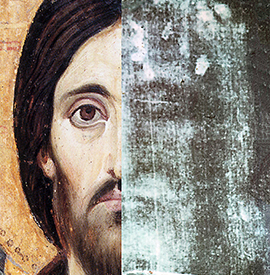
Turin is the capital city of the Piedmont region in Northwest Italy, and one of its attractions and enigmas is the Turin Shroud. The synoptic Gospels state that Joseph, a wealthy man from Arimathea, requested Jesus’s body from Pilate, wrapped it in a clean linen cloth, and buried it in his own tomb. The Shroud of Turin purports to be that same linen cloth, which miraculously, mysteriously, or falsely bears a likeness of our crucified Lord. Research in the 1970s and 1980s appeared to debunk claims of authenticity, and although the Roman Catholic Church houses the Shroud, it has never fully endorsed it.
More recent research has begun to tell a different story that might support the authenticity of this controversial artifact. Whatever you believe about its veracity, learning about the Turin Shroud is interesting and revealing of the depth of our Savior’s passion on the cross. Below are two external links. The first redirects to a recent Tucker Carlson podcast interview with Dr. Jeremiah Johnston, an expert in shroud research and a New Testament scholar who ministers internationally as president of the Christian Thinkers Society. The second link redirects to the YouTube video advertisement for the “Shroud of Turin Experience” exposition.